
Mother (2009)
MOTHER is a curious blend of a South Korean Neo-Noir, a variation on the multiple points of view embodied in Akira Kurosawa’s classic RASHOMON (1950), and a fascinating Hitchcockian thriller that has a magnificent payoff I never saw coming. It’s also firmly rooted in Korean culture, which emphasizes family relationships as paramount, especially the care the grown child is obligated to offer to an aging elder. Given the complete transformation of South Korean society in the past three decades, it’s not surprising that these core values are turned on their heads in MOTHER. Hye-ja Kim, in a riveting performance, has to constantly mind her semi-retarded 28-year-old son Bin Won, who not only still lives at home but still sleeps in her bed, one hand possessively on her breast. There’s no hint of incest here, but Kim is the South Korean embodiment of the classic Jewish mother – overpowering in her love for her offspring, to the point of murder and beyond. The film seems to purposefully start out with a discordant, jangling filmmaking style, perhaps corresponding to the son’s incoherent mind, and it takes awhile to get into the rhythm Bong is pursuing. I haven’t seen any of his movies, although his last one, THE HOST (2006) seems to have been a cut above the generic Asian monster from the deep film. MOTHER displays real filmmaking talent, virtuoso visual storytelling and highly effective if culturally off-putting performances. By that I mean absolutely no disrespect to Kim or Won, who are both excellent in MOTHER, but rather to the full-force emotionality of the Korean acting style, and how greatly it differs from the Western naturalistic acting that has come to dominate commercial cinema. South Korean characters can often seem frenzied in the intensity of what they are experiencing and feeling. Kim exemplifies this as, horrified, she witnesses her son first accused of the murder of a wanton yet canny young female Korean high school student, then released due to his mother’s unstinting efforts. Her search to gain Won’s freedom takes her through the bowels of a small Korean city with its usual complement of brutal police, drunk or drugged out young thugs, and girls who play with poop phones (seeing is believing) and “pervert” phones, which I surmise said girls use to document their sexual adventures with an eventual eye towards blackmail. Kim, as dogged and unstoppable as Humphrey Bogart in THE BIG SLEEP (Howard Hawks, 1946, Movie a Day Jan. 18, 2011) in pursuit of the evidence that will clear her son, is a true Noir hero(ine) who seeks a “truth” that proves far more unpleasant than she anticipates when she finally discovers it. The variability of the concept of truth becomes very aware to Kim when she has to come to terms with how biased her perspective has been. The viewer has been just as easily duped. Talk about the unreliable narrator – Won has trouble remembering things, so there’s a credible plot reason for a different reading to what we think we see just before the murder at the beginning of the film. His memories and Kim’s investigation are aided by Won’s brutish and disturbing friend Goo Jin , a moody version of a South Korean James Dean. The Noir aspects to MOTHER slowly become more about the illusory nature of our beliefs about and in people, as Hitchcock explored in films such as THE WRONG MAN (1956) and NORTH BY NORTHWEST (1959). Kim turns out to be quite different than the oppressive dragon-mother Asian cliché that our cultural and racial biases inevitably construct in this kind of film – she is more complex than most Western women portrayed on today’s screen, and she constantly surprised me by her actions and reactions. MOTHER comes full circle, recalling a haunting image of Kim dancing under the opening credits alone in a desolate rural landscape, and ending with her dancing on a bus with other parents from her son’s school. The drifting, almost ecstatic look on her face doesn’t seem to change from the first scene to the last. But everything in Kim’s world has been altered, and having witnessed MOTHER, we completely understand why. That’s the beauty of film, its ability to speak across cultures so subtly and engagingly.
Madeo. Dir.: Joon-ho Bong, 2009. 128 mins. South Korea. Korean with English subtitles. CJ Entertainment, Barunson. Produced by Tae-joon Park, Woo-sik Seo. Screenplay by Eun-kyo Park, Bong, based on story by Bong. Cinematography by Kyung-Pyo Hong. Edited by Sae-kyoung Moon. Production design by Seong-hie Ryu. Music by Byeong-woo Lee. With Hye-ja Kim, Bin Won, Goo Jin, Mi-Sun Jun, Sae-beauk Song, Byoung-Soon Kim, Woo-hee Chun, Gin-goo Kim, Moo Yeong-Yeo, Young-Suck Lee, Hee-ra Moon. Viewed on DVD.
Friday, January 21, 2011

New Class in October

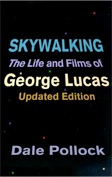
Skywalking:
The Life and Films
of George Lucas
Filled with revelations about the origins and making of American Graffiti, Star Wars, The Empire Strikes Back, Raiders of the Lost Ark, Read More
Dale Pollock will be offering a new class at Reynolda House this fall as part of the Portals of Discovery program. “Morality Tales in Film: Kieslowski’s DECALOGUE” will take place on five Tuesday evenings from 6-9 p.m. beginning Oct. 19, 2010 and ending Nov. 16, 2010 in Reynolda House’s auditorium. Each week Dale will discuss two episodes of this groundbreaking Polish TV series about the Ten Commandments. To register go to www.reynoldahouse.org.




Contact and Follow



_files/shapeimage_10_link_0.png)

_files/shapeimage_11_link_0.png)

I watch at least one movie every day and write about it. These are not reviews, but mini-essays on aspects of the film that I find interesting. Look for a new film discussed each and every day!


Dale M. Pollock is an award-winning teacher, writer and filmmaker. He is based in Winston-Salem, NC where he is a Professor of Cinema Studies and Producing at the University of North Carolina School of the Arts. Read more


DALE’S RATING: 4 popcorns
Photo by Diana Greene

_files/shapeimage_13_link_0.png)


