
Blazing Saddles
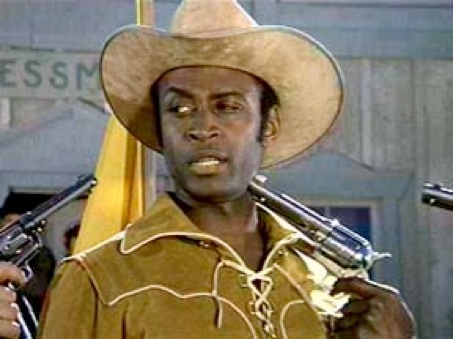
I don’t think I had seen BLAZING SADDLES since close to its original release more than 35 years ago, and it’s a pleasure to note how funny it remains. Still shocking in its frequent and pointed use of the N word, BLAZING SADDLES is one of the only Hollywood movies to deal openly and squarely with the racism rampant in our nation’s history, particularly in its move westward. There has to be some irony in this serious subject being visited solely by comedian Mel Brooks, but he makes the most of the opportunity. At one point the movie was going to star James Earl Jones, and Brooks supposedly fought hard to cast co-writer Richard Pryor, who was no more than a stand-up comedian when the film was being assembled. Luckily Warner Bros. held out for Cleavon Little, who makes Black Bart work in both 1874 and 1974, the two time frames in which this surrealistic comedy actually exists. BLAZING SADDLES came along at a time when Blaxploitation titles had been around for a few years, so Brooks and his team have fun exploiting the loving close-up usually devoted to the clothes and ride of, say, SUPERFLY (Gordon Parks, Jr., 1972), here bestowed on Little’s horse, gun and fly buckskin outfit. There are also parodies of Motown, black church choirs and other elements of African-American culture that no other white director of the period would have dared highlight. But since Brooks was out to make fun of everything, no cow (or horse, as in the one punched out by Alex Karras’ Mongo) was too sacred. We have Harvey Korman’s Attorney General Hedley Lamarr (Hedy Lamarr reportedly sued WB, which settled), depicted as not only racist, but thoroughly and pleasingly corrupt. Madeline Kahn does a brilliant Marlene Dietrich impersonation as Lilly von Shtupp (her funniest line about Little’s endowments, uttered in a pitch-black room, was excised by the studio), and Slim Pickens and Burton Gilliam (so delightful as the horny hotel clerk in PAPER MOON (Peter Bogdanovich, 1972) act the way cowboys usually act: dumb, racist, gun-happy and full of beans, literally and figuratively. The best parts of the film, however, are the ones involving Little and the town he has been sent to protect. The whites uniformly hate him, belittle him, slight him and want him gone, until suddenly they need him. The plot is anything but subtle, but Brooks makes his point: law and order are needed, no matter who does the enforcing. The only misstep came in the casting of Gene Wilder as the legendary gunslinger, the Waco Kid. Unless they had cowboy Bar Mitzvahs in Waco, Wilder is too young, too Jewish and too gentle for this kind of comedy. Brooks would have been better off casting a leathery-faced old coot in the role, although Little and Wilder do play off of each other well. Brooks himself breaks all the rules about movie realism, and seems like a governor who got off on the wrong train stop, arriving out West instead of in the Catskills. Things get really out of hand when the brawl between the bad guys and the townspeople spills over onto the actual Warner Bros. lot in Burbank, and invade the set of flamingly gay director Dom DeLuise, who has the predictable hissy fit. One could say that Brooks substituted one set of ethnic clichés (black) with another (German, Jewish, gay, Western), but the latter are funnier and done with great panache and style. No one will ever compare BLAZING SADDLES favorably to the great verbal comedies of Ernst Lubitsch (TROUBLE IN PARADISE, 1932) or Billy Wilder (SOME LIKE IT HOT, 1959), but in the 1970s, this is as funny as it got. Brooks did other brilliant comedic films, or at least parts of films, and played more inspired characters, but no film of his had the punch and aftereffect of BLAZING SADDLES.
Mel Brooks, 1974. 93 mins. Warner Bros. Produced by Michael Hertzberg. Screenplay by Brooks, Norman Steinberg, Andrew Bergman, Richard Pryor, Alan Uger, based on story by Bergman. Cinematography by Joseph Biroc. Edited by Danford Greene, John C. Howard. Production design by Peter Wooley. With Cleavon Little, Gene Wilder, Slim Pickens, Harvey Korman, Madeline Kahn, Mel Brooks, David Huddleston, John Hillerman, Burton Gilliam, Alex Karras, Liam Dunn, Dom DeLuise, Claude Ennis Starrett Jr., Carol Arthur, George Furth.
Monday, August 16, 2010

New Class in October

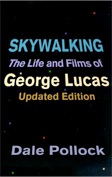
Skywalking:
The Life and Films
of George Lucas
Filled with revelations about the origins and making of American Graffiti, Star Wars, The Empire Strikes Back, Raiders of the Lost Ark, Read More
Dale Pollock will be offering a new class at Reynolda House this fall as part of the Portals of Discovery program. “Morality Tales in Film: Kieslowski’s DECALOGUE” will take place on five Tuesday evenings from 6-9 p.m. beginning Oct. 19, 2010 and ending Nov. 16, 2010 in Reynolda House’s auditorium. Each week Dale will discuss two episodes of this groundbreaking Polish TV series about the Ten Commandments. To register go to www.reynoldahouse.org.



Contact and Follow







I have a personal goal of watching a feature film every day. Seven days a week.. 365 days a year. I will be honest -- there are days I will see two films and skip a day. Otherwise, expect a mini-review here every day.


Dale M. Pollock is an award-winning teacher, writer and filmmaker. He is based in Winston-Salem, NC where he is a Professor of Cinema Studies and Producing at the University of North Carolina School of the Arts. Read more


DALE’S RATING: 4 popcorns
Photo by Diana Greene




